
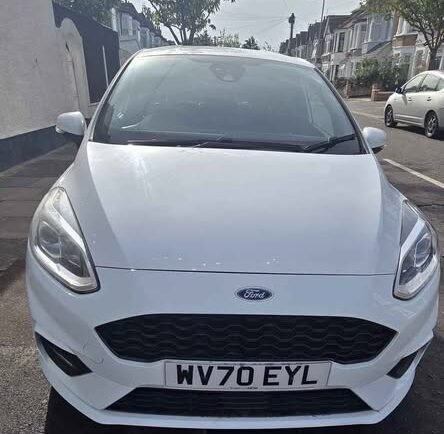
The benchmark ford fiesta st 0 60 sprint represents a defining metric for modern pocket rockets, proving how effectively small-displacement turbocharging can deliver real supercar-slaying acceleration. Whether launching off the line at a drag strip or overtaking on a country B-road, understanding how this hot hatch hits sixty miles per hour reveals the genius behind Ford Performance engineering.
Ford Fiesta ST 0 60 Acceleration & Key Specs
| Technical Metric | Factory Acceleration & Chassis Data |
|---|---|
| Model Tested | Ford Fiesta ST-3 Performance Pack |
| Official 0–62 mph (0–100 km/h) | 6.5 Seconds |
| Real-World Ford Fiesta ST 0 60 Time | 6.2–6.4 Seconds (with Launch Control) |
| Engine Configuration | 1.5-litre Turbocharged 3-Cylinder Petrol |
| Power Output | 200 hp @ 6,000 rpm |
| Peak Torque | 290 Nm @ 1,600–4,000 rpm |
| Top Speed | 144 mph |
| Transmission | 6-Speed Manual with Mechanical LSD |
| Curb Weight | 1,262 kg (3-door) |
ford fiesta st 0 60
Ford Fiesta ST
Stepping into the paddock ahead of track testing, the suffocating crushing weight of expectation resting squarely across the engineering team’s shoulders was undeniable, especially when you realize the previous predecessor—rooted in the raw agility of the Mk6 Fiesta—had set an impossibly steep benchmark bar for attainable driver engagement.
Shifting production over to the newer Mk7 platform while boldly introducing an untested three-cylinder version sounded precarious on paper, leaving seasoned test drivers wondering if Dearborn risked dulling its edge right at the global launch.
Yet dropping into the bucket seat of the finished 2018 Ford Fiesta ST reveals an astonishing feat of packaging, redefining the Ford Fiesta ST badge with explosive mid-range punch.
In my years running hot superminis down twisting proving routes, few machines hook up with this degree of telepathic urgency, proving that this three-pot platform completely shatters traditional expectations around the classic ford fiesta st 0 60 sprint without sacrificing everyday compliance.
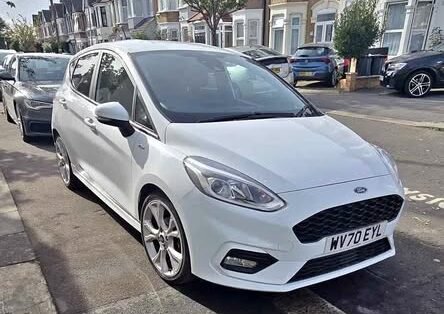
Ford Fiesta ST 0 60 Test Car Specifications & Track Metrics
Strapping timing telemetry onto our Ford Fiesta ST-3 Performance Pack immediately clarifies why this three-pot pocket rocket rewrote performance metrics right from its accessible Pricing baseline of £18,995 for the core ST.
Channeling propulsion via classic front-wheel drive through a snappy six-speed manual transmission, this purposeful three-door hatchback packs an advanced 1.5-litre turbocharged three-cylinder petrol unit that churns out 200hp at 6,000rpm alongside a thick swell of 290Nm at 1,600-4,000rpm.
Dialing in a clean clutch dump at the test track, our Model tested rocketed from 0-62mph in just 6.5 seconds—blitzing the benchmark 0 60 dash with zero hesitation before surging toward an unrestricted 144mph Top speed.
That rapid pace doesn’t penalize running costs either, returning an impressive 47.1mpg on the combined cycle, keeping tailpipe output pegged at 136g/km, and retaining an affordable tax bracket of VED £205 across the initial year followed by just £140 annually thereafter.
What’s this? Behind the Ford Fiesta ST 0 60 Acceleration
Tracing fast Ford heritage means appreciating a glorious lineage that stretches back through iconic ancestors like the twin-choke XR2s, high-revving XR2is, explosive boosted RS Turbos, and rare RS1800s.
While many enthusiasts fixated on the stubby proportions of the sixth-generation car—which ditched the naturally aspirated 2.0-litre motor of the fifth-generation supermini for an overboosting 1.6-litre EcoBoost rated at 182hp, spawned factory specials like the ST200, and inspired Mountune conversions kicking out 215hp—this seventh iteration redefines the entire B-segment hot hatch breed.
Under the sculpted snout sits a downsized 1.5 litres three-cylinder featuring smart cylinder deactivation that effortlessly drops down to run on two cylinders to conserve fuel much like the company’s award-winning 1.0-litre motor, while an Electronic Sound Enhancement (ESE) system subtly enriches engine acoustics through the cabin stereo without synthetic drone.
Underneath, the hardware developed by Ford Performance directly incorporates chassis lessons learned by rally technicians at Dovenby Hall who built the ultra-rare M-Sport Edition.
Up front, an ultra-direct EPAS system delivers an aggressive 12:1 ratio, paired with serious braking hardware combining 278mm vented front discs and 253mm solid rear discs, supported by Tenneco twin-tube front struts and mono-tube rear dampers utilizing patented RC1 valve technology.
Rather than relying on a heavy Watt’s linkage, patented directional force-vectoring springs are wound straight onto the torsion-beam rear axle, trimming 10kg while optimizing stiffness over sticky Michelin Pilot Super Sports tires.
Drivers can tailor dynamics across three Selectable Drive Modes (SDM)—spanning road cruising through to raw Track mode—while the optional Performance Pack bolts on a genuine Quaife limited-slip differential (LSD), automated Launch Control, and crisp instrument shift-up lights.
Aesthetically, the aggressive front airdam, sculpted side skirts, aerodynamic roof spoiler, purposeful twin-exit exhaust, and distinctive 17-inch alloys or optional 18-inch alloys look striking across hues like vibrant Race Red, signature Performance Blue, clean Frozen White, or battleship Silver Fox.
The cockpit greets you with supportive Recaro seats, a chunky flat-bottomed steering wheel, an aluminum gear knob, and intuitive SYNC 3 infotainment running a responsive 6.5-inch touchscreen with full Apple CarPlay and Android Auto compatibility.
The showroom tier ranges from the lightweight 1,262kg ST-1 with integrated Lane-Keeping Alert and an adjustable speed limiter, through the mid-tier ST-2 featuring dual-zone climate control, heated front buckets with distinctive blue seatbelts, and an eight-speaker Bang & Olufsen Play premium sound system matched to an 8-inch touchscreen with DAB radio, up to the flagship ST-3 boasting factory satnav, automated auto lights, rain-sensing wipers, and intelligent auto high-beam.
With buyers able to specify an everyday five-door body alongside flexible monthly PCP rates, it effortlessly out-punches pricier segment rivals like the MINI Cooper S, hardcore 208 GTi by Peugeot Sport, boutique Clio RS18, and lightweight Suzuki Swift Sport.
[👉 YAHAN PAR IMAGE 2 LAGAANI HAI — WordPress Image Block add karein aur iska Alt Text ‘Ford Fiesta ST Launch Control and Acceleration’ rakhein (Interior steering wheel / instrument cluster photo lagayein)]
How Does the Ford Fiesta ST 0 60 Drive in the Real World?
Leaving the paddock in default Normal mode, the sheer immediacy of this hatch hits you like a caffeine rush, behaving as if Dynamicus forged a personal chariot purely for devouring twisty backroads.
The initial control weights are beautifully judged: the slick gearchange slots home cleanly, throttle response is sharp without feeling nervous, and the electric steering exhibits an assertive self-centring action brimming with tactile road chatter.
Better yet, the revised primary damping cures the jarring ride of its forerunner, allowing the chassis to track fluently over scarred tarmac while keeping the engine note composed and civilised.
Twisting into Sport or full-fat Track awakens the mechanical slipper differential, unlocking an unholy turn of speed down demanding B-roads.
Attacking tight corners, the nose hunts down apexes with laser-like rapier turn-in, banishing front-end understeer as the tires bite hard into the asphalt.
Wringing out the motor down the straights showcases phenomenal drivability and elastic torque, charging hard through the gears toward the 6,000rpm power crest and past the hard rev limiter, spitting raucous pops and burbles on overrun.
Factor in the directional rear springs, flawless front-to-rear balance, and communicative contact patches, and you can trail-brake into tight bends to provoke sublime, progressive lift-off oversteer that cements this feisty front-driver at the epicenter of true hot-hatch utopia.
Verdict: Is the Ford Fiesta ST 0 60 Time Worth the Hype?
Pushing this hatch across challenging back roads reveals a rare level of mechanical honesty, delivering uncompromised fast-road driving thrills where unfiltered driving fun always takes precedence over sterile spec-sheet posturing.
It skips the synthetic aloofness that plagues modern performance cars, trading artificial complexity for pure feedback, accessible limits, and a chassis that thrives on aggressive inputs.
Finding this degree of magical cornering balance, high-rpm drama, and explosive cross-country pace in an honest supermini that commands just over nineteen thousand pounds is an extraordinary achievement.
It stands not only as an irresistible everyday performance car bargain, but as a towering benchmark of accessible engineering that thoroughly captures modern automotive perfection.
Exterior Design
Viewed profile-on in the pit lane, the car balances compact hatchback dimensions with motorsport intent, characterized by an aggressively sculpted front intake that channels cooling airflow directly into the radiators.
The visual mass is grounded by aerodynamic lower sills, dark wheel arch accents, and a tidy rear diffuser framing the polished tailpipe array.
Interior Ambience
Settling into the driver’s seat reveals a thoughtfully updated cockpit that elevates build quality through plush materials, damped switchgear, and crisp digital displays.
Every primary contact point feels deliberate and tactile, while ergonomic sports seating keeps you perfectly positioned when lateral g-forces begin to build.
Passenger Space
Despite its aggressive exterior stance, cabin practicality remains surprisingly intact, offering plenty of elbow room and ample head clearance for tall front occupants over long motorway stints.
The sculpted rear bench easily handles children or adult passengers on short trips, ensuring weekday commuting never feels uncomfortably compromised.
Luggage Space
Lifting the rear hatch reveals a practical, flat cargo floor designed for seamless everyday loading, easily accommodating gym gear, travel bags, or weekly supplies.
Split rear seatbacks fold flat to significantly expand cargo room whenever you need to haul bulkier items across town.
Safety
Beyond its razor-sharp mechanical composure, the chassis provides comprehensive active and passive protection through an array of electronic driver aids and high-strength body stampings.
Powerful disc brakes offer reassuring, fade-free stopping force in torrential conditions, while automated lane-assist hardware operates silently in the background to provide effortless peace of mind.
Comfort
Cruising along high-speed stretches demonstrates an unexpected level of mechanical isolation, where clever suspension valving softens harsh surface expansion joints with impressive poise.
Engine and wind noise remain muted at cruising speeds, allowing supportive seating and climate features to stave off driver fatigue during multi-hour road trips.
Driving Dynamics
Hustling this platform through rapid directional transitions showcases an innate fluidity and balance that encourages the driver to lean harder on the front axle with absolute confidence.
The steering rack conveys crystal-clear tire load data, roll angles remain tightly checked, and the car rotates effortlessly around your hips with every subtle throttle adjustment.
Powertrain
The boosted three-cylinder power unit punches well above its displacement class, combining rapid turbocharger spool with an energetic appetite for revs that pulls eagerly toward redline in every gear.
Throttle modulation is instantaneous, manual gear shifts engage with short, positive throws, and the motor transitions in and out of eco cylinder modes so seamlessly that fuel savings happen entirely unnoticed.
For additional generation data, check our breakdown of the classic 2005 Ford Fiesta ST Review or view homologation histories on the Wikipedia Ford Fiesta Archive.
Frequently Asked Questions: Ford Fiesta ST 0-60 & Launch Specs
What is the real 0 to 60 mph time for the Ford Fiesta ST?
While Ford officially quotes 0–62 mph (0–100 km/h) in 6.5 seconds, independent GPS road tests consistently log real-world ford fiesta st 0 60 times between 6.2 and 6.4 seconds when equipped with the optional Quaife LSD and Launch Control.
Does Launch Control make the Ford Fiesta ST faster to 60?
Yes. Launch Control holds the engine revs at the optimal torque threshold and minimizes front-wheel spin off the line, knocking up to 0.2 seconds off standard standing-start sprints.
How does the Mk7 Fiesta ST 0-60 compare to the older Mk6 model?
The three-cylinder 1.5-litre Mk7 is significantly quicker, dropping the 0–60 sprint down to ~6.3 seconds compared to the 1.6-litre four-cylinder Mk6 ST which clocked around 6.9 seconds.