
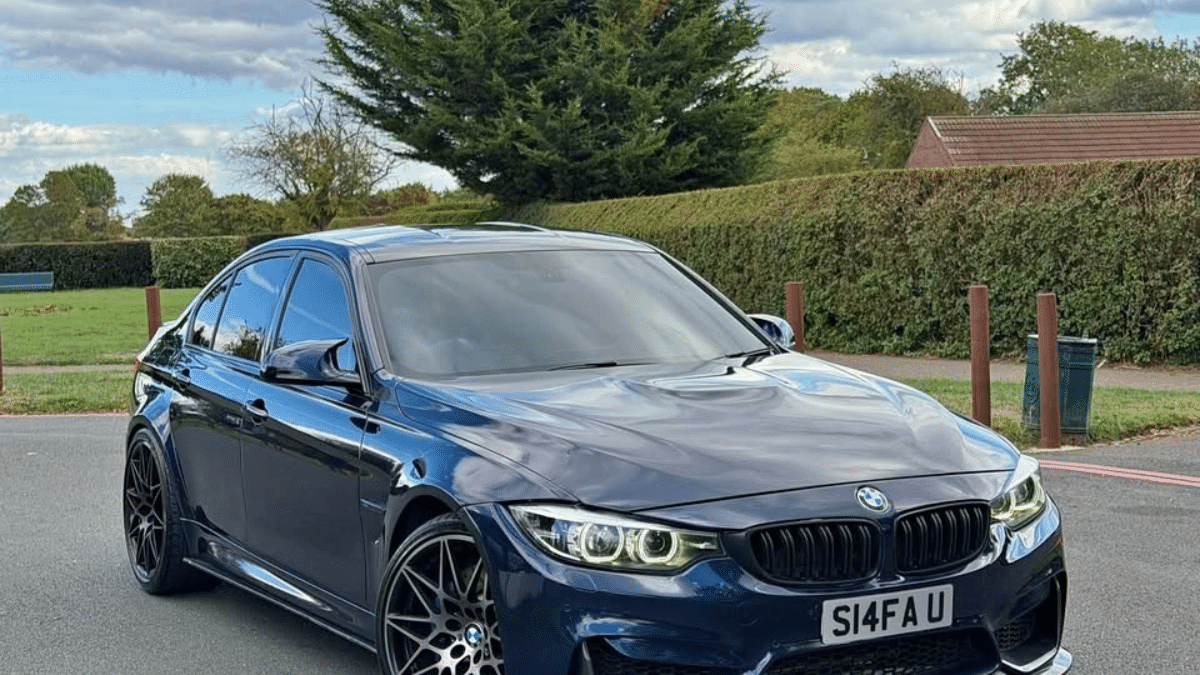
The f80 m3 competition represents the pinnacle of BMW’s modern rear-wheel-drive performance era. When launched, the fifth-generation M3 saloon introduced turbocharging to the badge, combining lightweight carbon engineering with aggressive rear-wheel-drive dynamics.
For used car enthusiasts scouting classifieds today, the market is saturated with conflicting details regarding late-cycle registrations, factory options, and package revisions. This definitive buyer’s guide uncovers mechanical updates, model year nuances, and crucial maintenance checkpoints for buyers targeting this iconic super-saloon.
The Competition Package Transformation
When standard early cars debuted, critics noted a spike in low-end boost that challenged the rear tyres on damp tarmac. The arrival of the f80 m3 competition package (Option Code ZCP) fundamentally remedied these concerns.
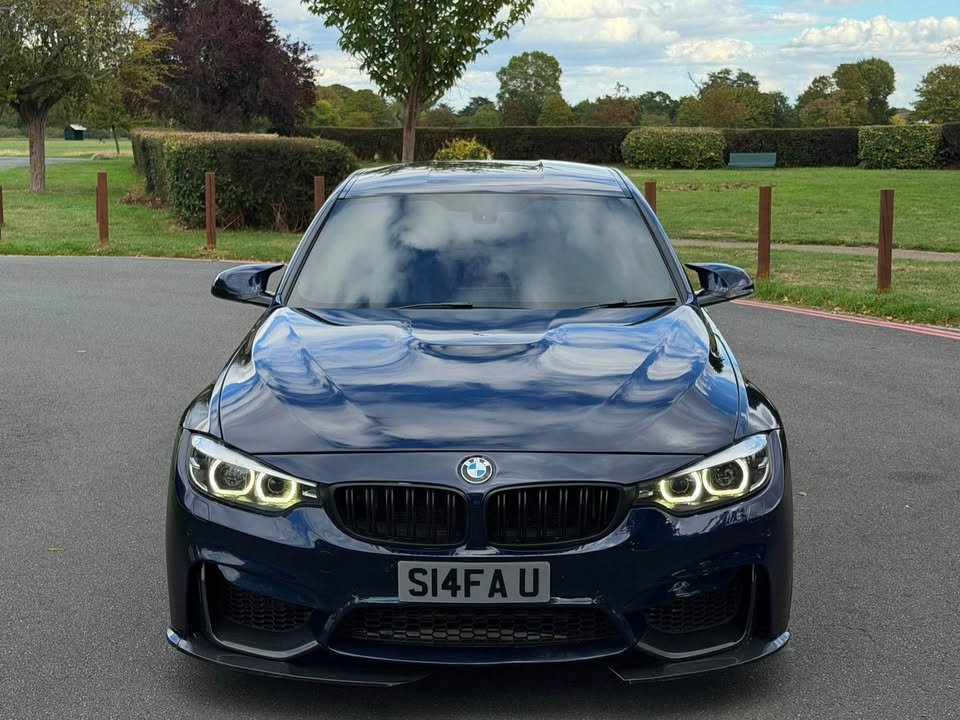
Rather than a simple horsepower bump, the package brought comprehensive chassis re-engineering:
- Recalibrated Active M Differential: Smoother lockup progression under heavy throttle application.
- Revised Dynamic Stability Control (DSC): Higher slip-angle threshold before electronic intervention.
- Adaptive M Suspension: Stiffer progressive springs, revised dampers, and upgraded anti-roll bars.
- Lightweight Sports Exhaust: Unrestricted bypass valves paired with black chrome quad-exit tailpipes.
S55 Twin-Turbo Engine & Crank Hub Engineering
Under the lightweight aluminium bonnet of the m3 f80 competition sits the 3.0-litre S55 twin-turbocharged inline-six. Derived from the N55, this bespoke M unit features a closed-deck cylinder block, twin mono-scroll turbochargers, a forged steel crankshaft, and an air-to-water top-mount charge cooler.
Power in Competition specification rises to 444 bhp (450 PS) and 406 lb-ft (550 Nm) of torque. Unlike high-volume platforms like the BMW M140i, the S55 incorporates a magnesium oil sump with an auxiliary extraction pump to preserve lubrication during sustained high-G track loads.
The S55 Crank Hub Reality
Prospective buyers frequently ask about the friction washer crank hub assembly. While failure rates on unmapped stock engines remain minimal, heavily tuned cars pushing aggressive torque maps can slip the timing gear. Sourcing a car with verifiable service history and factory software remains essential.
Model Year Breakdown: 2017 to 2020 Registration Nuances
Navigating late-cycle production dates is where used buyers encounter the greatest confusion in online inventory listings.
The Facelift Era: BMW M3 2017
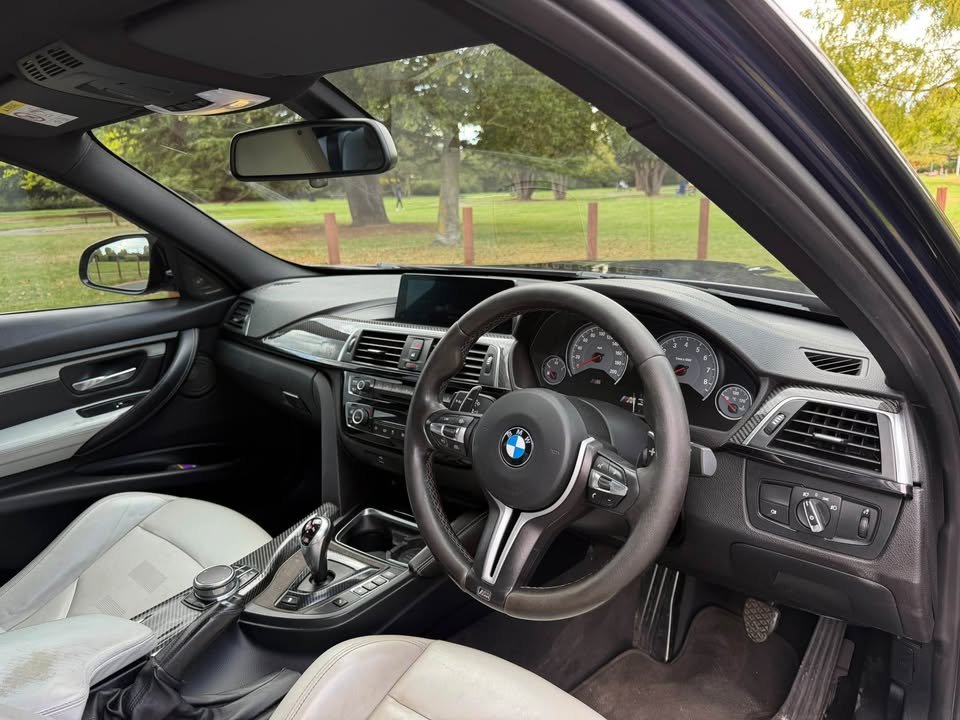
The bmw m3 2017 model year represents the introduction of the LCI 2 (Life Cycle Impulse) update. Key upgrades included redesigned hexagonal adaptive LED headlights, illuminated M badges on the seat backrests, and the updated iDrive 5.0 (and subsequent 6.0) interface featuring wireless Apple CarPlay compatibility.
Production Halts: BMW M3 2018
The bmw m3 2018 production year holds major historical importance. Due to the introduction of Europe’s stringent Worldwide Harmonised Light Vehicle Test Procedure (WLTP) emissions regulations in mid-2018, BMW officially ended production of the F80 saloon in August 2018.
Late Registrations: BMW M3 2019 & 2020 BMW M3 Queries
Because factory production ended in 2018, classified searches for a bmw m3 2019, 2019 bmw m3, or 2019 m3 bmw refer exclusively to late-registered dealer stock or cars that sat unregistered during logistical changeovers.
Similarly, search queries targeting a 2020 bmw m3 fall into one of two categories:
- Extremely delayed final registration examples of late-batch F80 cars.
- The initial rollout phase of the incoming G80 generation.
Chassis, Drivetrain & 7-Speed M-DCT Hardware
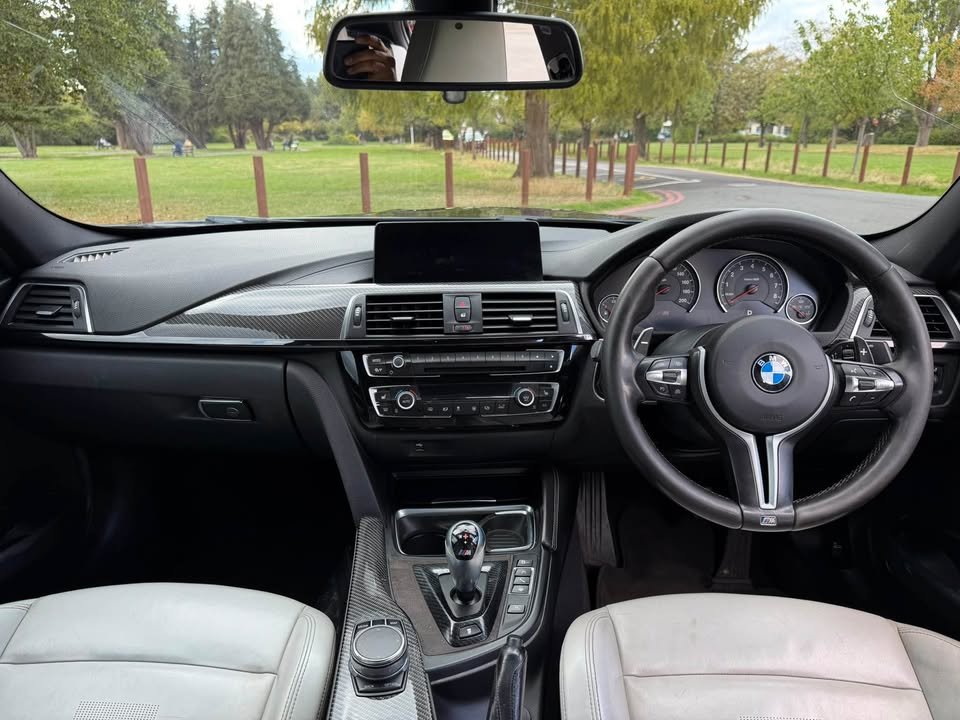
The f80 m3 competition was offered with either a standard 6-speed manual gearbox (with automatic rev-matching) or a lightning-quick 7-speed M Dual Clutch Transmission (M-DCT) featuring Drivelogic.
- 7-Speed M-DCT Performance: Shifts gears in fractions of a second without boost loss, delivering the quickest acceleration and authentic track-ready launches.
- Style 666M Forged Alloys: Fitted with staggered Michelin Pilot Super Sport or Sport 4S tyres (265/30 R20 front, 285/30 R20 rear) to maximize road footprint.
- Lightweight Seats: Competition cars feature cut-out bucket seats with distinctive M-stripe woven seatbelts.
When evaluating practical high-performance daily vehicles against executive cruisers such as the BMW X5 M50d, the lightweight, rear-wheel-drive purity of the F80 delivers unmatched agility.
In-Depth Technical Specifications Table
The technical breakdown below outlines factory benchmarks for the Competition Package:
| Mechanical Metric | 6-Speed Manual Gearbox | 7-Speed M-DCT Transmission |
|---|---|---|
| Engine Code | S55B30 Twin-Turbo 3.0L Inline-6 | S55B30 Twin-Turbo 3.0L Inline-6 |
| Power Output | 444 bhp (450 PS / 331 kW) @ 7,000 RPM | 444 bhp (450 PS / 331 kW) @ 7,000 RPM |
| Peak Torque | 406 lb-ft (550 Nm) @ 1,850–5,500 RPM | 406 lb-ft (550 Nm) @ 1,850–5,500 RPM |
| 0–62 mph (0–100 km/h) | 4.2 seconds | 4.0 seconds (tested 3.9s) |
| Top Speed | 155 mph (174 mph with M Driver’s Pack) | 155 mph (174 mph with M Driver’s Pack) |
| Kerb Weight (DIN) | 1,515 kg | 1,540 kg |
| Front / Rear Brakes | 380 mm / 370 mm Vented Drilled Steel | 380 mm / 370 mm Vented Drilled Steel |
| Luggage Capacity | 480 Litres | 480 Litres |
Pre-Purchase Inspection: Essential Fault Checks
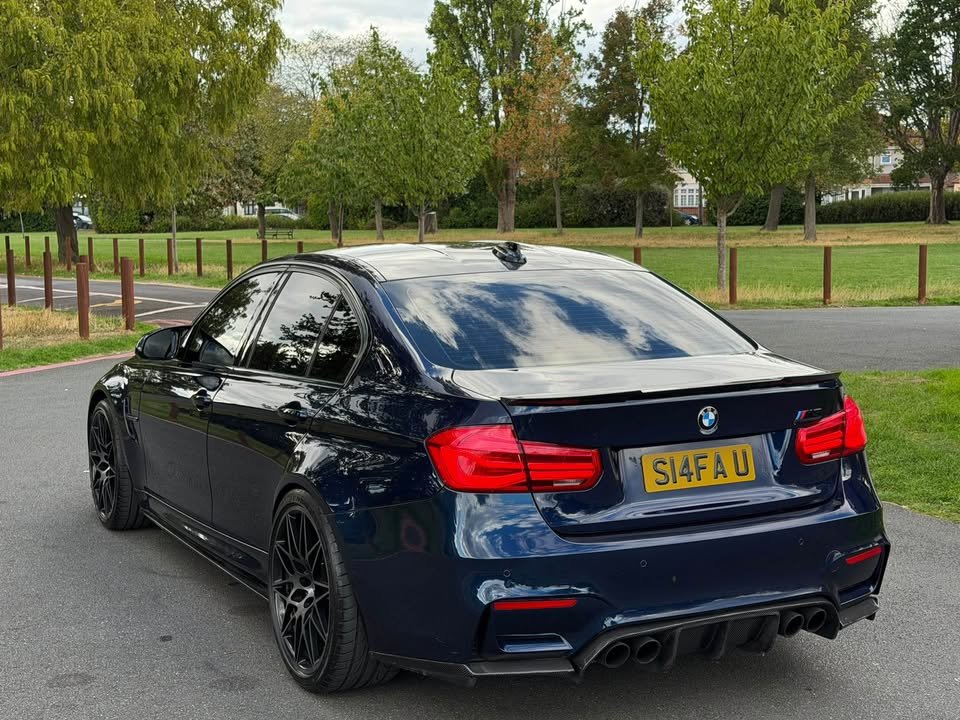
When viewing a pre-owned f80 m3 competition, inspect these items:
- Top-Mount Intercooler Leakage: The factory aluminium air-to-water charge cooler can develop internal leaks, leaking coolant into the intake tract. Check the secondary mini-coolant reservoir beside the engine cover for low levels.
- Valve Cover & Oil Filter Housing Gaskets: Inspect the front and rear of the cylinder head for weeping oil that drips onto the exhaust manifold.
- Differential Bushings: The rear differential carrier bushings (especially the rear subframe mount) are prone to tearing under aggressive hard launches.
- Alloy Wheel Corrosion: The diamond-cut face of the 20-inch Style 666M wheels can suffer from lacquer peel around the lug holes if aggressive wheel acids were used.
Frequently Asked Questions (FAQ)
What makes the F80 M3 Competition different from a standard F80 M3?
The f80 m3 competition package raises power output from 425 bhp to 444 bhp, recalibrates the electronic differential and stability software, introduces stiffer progressive suspension springs, and adds 20-inch forged Style 666M wheels, cut-out sport seats, and a black-tipped sports exhaust.
Why do some listings show a 2019 or 2020 BMW M3 when production ended in 2018?
Official factory production of the F80 M3 concluded in August 2018 due to European emissions changes. Any listing advertised as a bmw m3 2019, 2019 bmw m3, 2019 m3 bmw, or 2020 bmw m3 represents a car that was manufactured in 2018 but registered late at dealerships before being sold to its first owner.
How reliable is the S55 engine in the M3 F80 Competition?
The S55 engine in the m3 f80 competition is a robust power unit. Common issues are generally limited to valve cover gasket sweating, water pump wear, and internal weeping on the factory top-mount charge air cooler. The infamous crank hub failure primarily impacts cars running aggressive aftermarket software maps.
What is the 0–60 mph time of the F80 M3 Competition?
Equipped with the 7-speed M-DCT gearbox and Michelin Pilot Sport rubber, the f80 m3 competition completes the 0–60 mph sprint in 3.8 to 3.9 seconds. The 6-speed manual completes the sprint in approximately 4.1 to 4.2 seconds.
Is the BMW M3 2017 or BMW M3 2018 a better purchase?
Both the bmw m3 2017 and bmw m3 2018 feature the full LCI 2 updates, including revised LED lighting and modern iDrive architecture. Condition, verifiable break-in service at 1,200 miles, and complete BMW digital service history matter far more than registration month.
Final Verdict: Is the F80 Competition the Sweet Spot?
The f80 m3 competition stands in an enviable market position. It avoids the heavy kerb weight (over 1,800 kg) and controversial front styling of newer generations while delivering significantly higher agility and modern technology compared to older naturally aspirated generations.
Whether selecting a cherished bmw m3 2017 or a late-registration 2019 bmw m3, an unmodified, well-serviced example remains one of the finest performance saloons ever engineered.
1 thought on “F80 M3 Competition Used Buyer’s Guide: 7 Essential Truths for 2017–2020 Model Shoppers”