
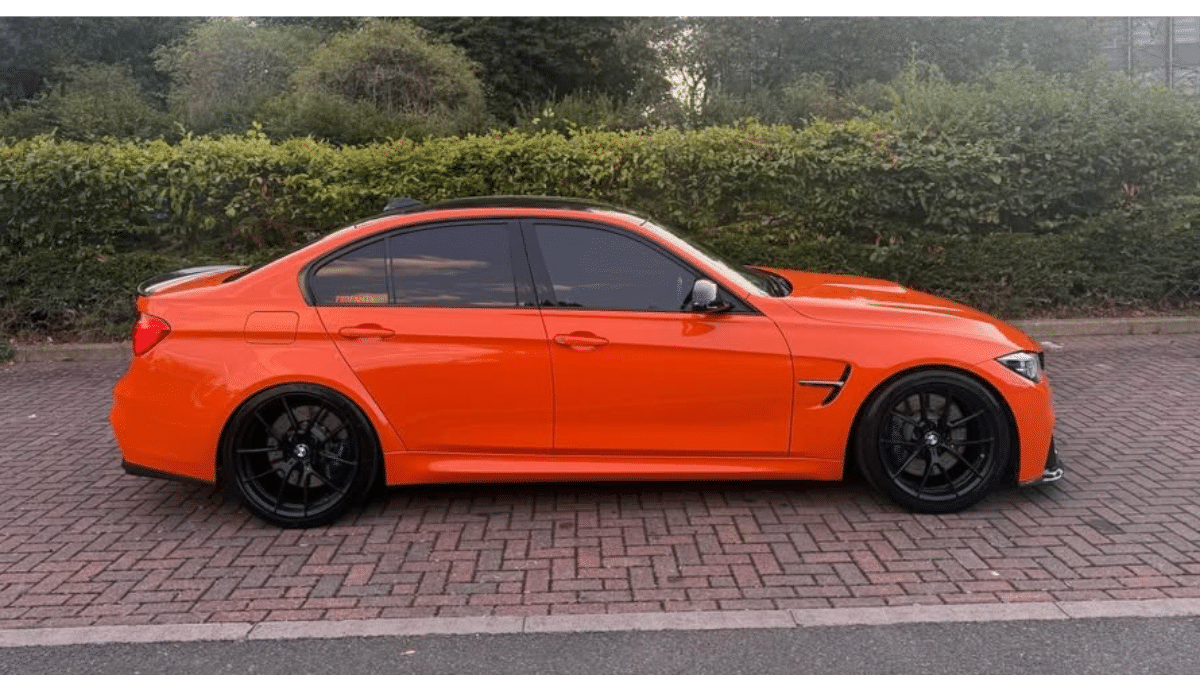
The bmw m3 competition touring is the high-performance estate wagon that car enthusiasts spent decades begging BMW to build. For years, buyers who demanded track-honed dynamics in an estate format were forced to look toward rivals like Audi’s RS4 Avant. That all changed with the launch of the G81 generation, blending a twin-turbo motorsport powertrain with real-world boot space.
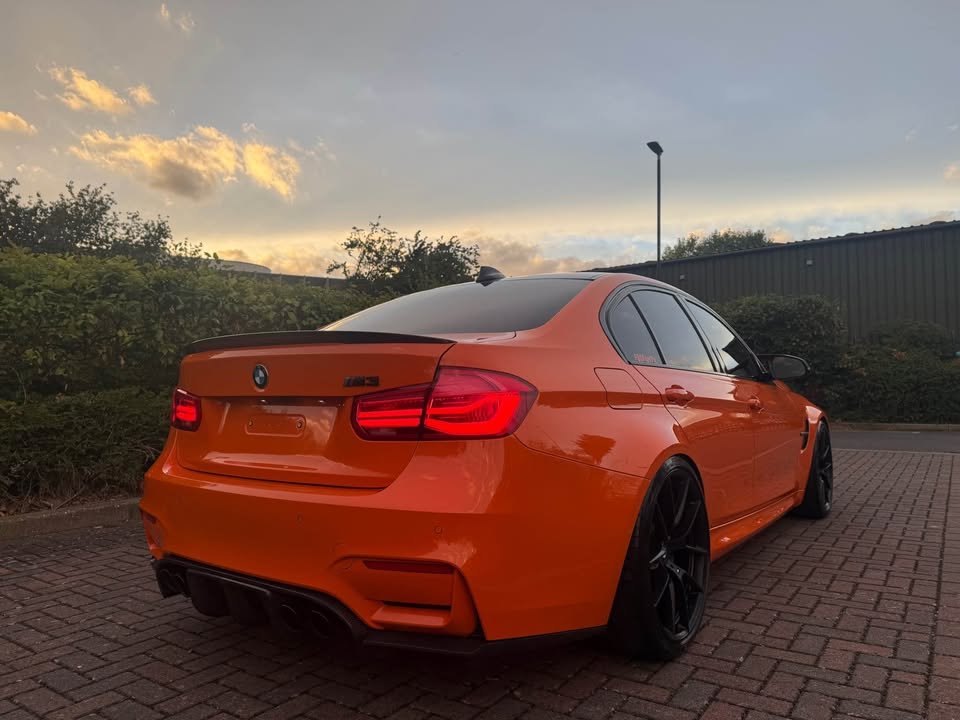
Choosing the right body style comes down to daily lifestyle, weight dynamics, and chassis preferences. Should you buy the bmw m3 touring competition, stick to the traditional bmw m3 saloon, or consider a performance two-door coupe? This comprehensive guide breaks down performance figures, practical cargo limits, and road manners to help you decide.
The Estate Evolution: Why the Touring Matters
BMW previously built M5 Tourings in limited runs (such as the E34 and the V10 E61), but a factory production M3 estate remained an elusive prototype for decades. With the G81 generation, the bmw m3 competition touring turned that concept into a showroom reality.
Classified buyers and enthusiasts searching for an m3 comp touring will find that BMW did not compromise on powertrain architecture. The estate is exclusively produced in Competition trim, ensuring high-boost outputs and high-end chassis hardware are standard out of the box.
Whether you refer to it in search portals as a bmw m3 competition estate or an m3 competition estate, the appeal is straightforward: genuine 180 mph supercar capability without having to leave luggage or family pets behind.
Touring vs Saloon: Cargo Practicality and Everyday Usability
The core argument for choosing the estate over a traditional saloon boils down to load flexibility.
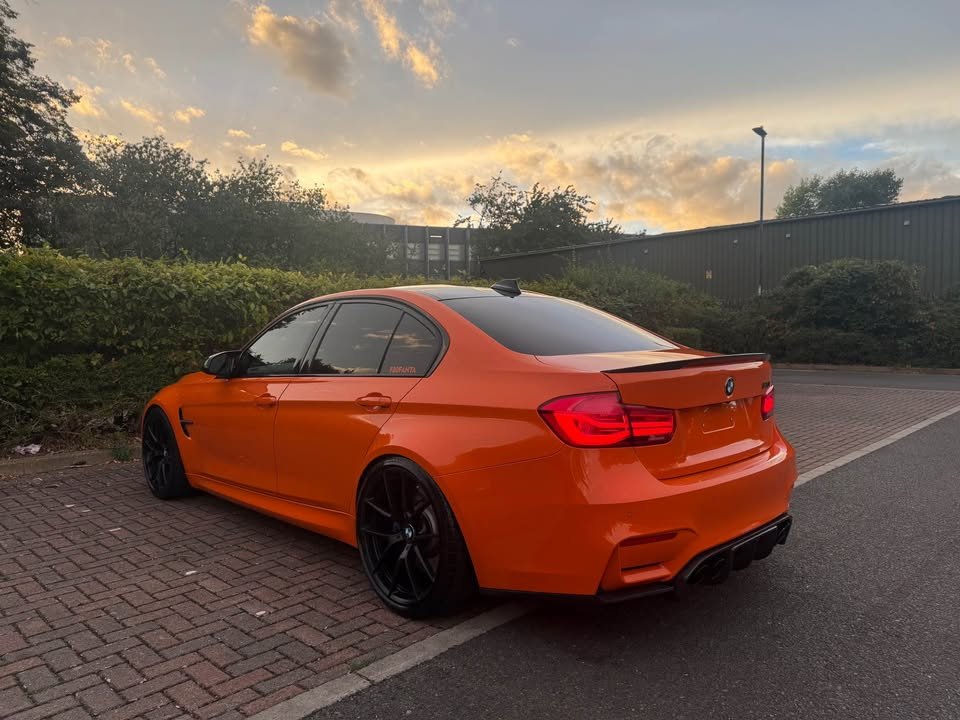
Boot Capacity & Rear Cargo Access
- Cargo Dimensions: A standard bmw m3 saloon offers a fixed 480-litre saloon boot. The estate expands cargo room to 500 litres under the luggage cover, which opens up to 1,510 litres when the rear seats fold flat.
- Split Tailgate Glass: Like standard 3 Series Tourings, the rear window glass opens independently from the main tailgate. This allows you to toss in small sports bags or shopping bags in tight UK car parks without opening the whole electric tailgate.
- Under-Floor Storage: Retractable luggage cover blinds and net partitions store neatly beneath the false boot floor when carrying large loads.
For motorists cross-shopping large executive family haulers like the BMW X5 M50d luxury guide, the touring layout offers comparable loading accessibility with a much lower, more controlled driving position.
The Coupe Alternative: M3 Saloon vs Two-Door M4
Enthusiasts often search for an m3 coupe, but that badge officially ended with the E92 generation. Today, two-door variants are branded under the M4 badge, leaving the M3 designation reserved strictly for four-door and estate formats.
Saloon vs Coupe Ergonomics
- Everyday Ingress: The m3 saloon features four standard doors, providing effortless access to the rear seats for children, passengers, or child car seats without awkward seat-folding gymnastics.
- Body Stiffening & Weight: If you prefer pure road poise, a new bmw m3 saloon weighs roughly 85 kg less than the equivalent estate wagon.
- Carbon Roof Advantage: Unlike the bmw m3 competition touring, which comes exclusively with a steel roof (finished in gloss black to support estate roof rails), the saloon and coupe feature a standard Carbon-Fibre Reinforced Plastic (CFRP) roof that lowers the center of gravity.
S58 Powertrain and Standard M xDrive Configuration
Under the bonnet of the bmw m3 competition touring sits the proven 3.0-litre S58 twin-turbocharged inline-six engine.
- Engine Output: 510 PS (503 bhp) and 650 Nm (479 lb-ft) of torque (boosted to 530 PS on 2025+ LCI updates).
- M xDrive as Standard: While the saloon can be ordered in pure rear-wheel drive in select markets, the bmw m3 touring competition is sold exclusively with BMW’s intelligent M xDrive all-wheel-drive system and an 8-speed M Steptronic transmission.
- Traction Reliability: The rear-biased AWD system ensures instantaneous launches in wet British weather, making zero-to-sixty sprints clean and repeatable on damp asphalt.
Drivers moving up from high-performance compact hatchbacks like the BMW M140i performance review will notice how much more composed and planted this twin-turbo estate feels under full throttle.
In-Depth Body Style Technical Comparison
The technical breakdown below details the mechanical differences across the current model lineup:
| Specification Benchmark | M3 Competition Touring (G81) | M3 Competition Saloon (G80) | M4 Competition Coupe (G82) |
|---|---|---|---|
| Engine Code | S58 Twin-Turbo 3.0L Inline-6 | S58 Twin-Turbo 3.0L Inline-6 | S58 Twin-Turbo 3.0L Inline-6 |
| Drivetrain | M xDrive AWD (Standard) | RWD or M xDrive AWD | RWD or M xDrive AWD |
| 0–62 mph (0–100 km/h) | 3.6 seconds | 3.5 seconds (xDrive) | 3.5 seconds (xDrive) |
| Top Speed | 155 mph (174 mph with Pack) | 155 mph (180 mph with Pack) | 155 mph (180 mph with Pack) |
| Luggage Capacity | 500 – 1,510 Litres | 480 Litres | 440 Litres |
| Kerb Weight (DIN) | 1,865 kg | 1,780 kg | 1,725 kg |
| Roof Construction | Steel (Gloss Black) | Carbon Fibre (CFRP) | Carbon Fibre (CFRP) |
Chassis Dynamics: Does the Touring Suffer from Extra Weight?
To maintain the torsional stiffness expected of an M badge, BMW added tailored underfloor bracing, a rear luggage floor shear panel, and specific rear axle damping rates to the bmw m3 competition touring.
On twisty B-roads, the extra 85 kg over the saloon is barely perceptible to everyday drivers. The front axle bites into turns with identical aggression, and the active differential lets you rotate the rear end progressively. It is only on high-speed track curb transitions that the slightly higher rear mass becomes noticeable compared to an m3 saloon.
UK Market Residual Values and Running Costs
From an ownership standpoint, the bmw m3 competition touring has demonstrated remarkably slow depreciation across the UK used car market. Because enthusiast demand far outstrips initial factory allocations, estate models often command a £5,000 to £10,000 premium over equivalent-year saloons on dealer forecourts.
- Fuel Economy: Expect 26–28 mpg on steady motorway cruises, dipping down to 15–18 mpg during spirited driving or stop-start traffic.
- Tyres & Consumables: Like the saloon, the estate uses staggered 19-inch front and 20-inch rear forged wheels. Factor in £900–£1,200 for a fresh set of Michelin Pilot Sport 4S tyres.
- VED Road Tax: All new variants sit well above the £40,000 luxury car threshold, incurring the standard five-year expensive car supplement alongside standard road tax bands.
Frequently Asked Questions (FAQ)
What makes the BMW M3 Competition Touring different from the saloon?
The bmw m3 competition touring features an estate wagon long-roof body that provides 500 to 1,510 litres of flexible cargo capacity, compared to the saloon’s fixed 480-litre boot. It also comes standard with M xDrive all-wheel drive, bespoke rear chassis bracing, and a gloss-black steel roof rather than a carbon-fibre panel.
Does the BMW M3 Touring come in a manual gearbox?
No. Every m3 comp touring is equipped exclusively with an 8-speed M Steptronic automatic transmission paired with xDrive all-wheel drive to handle the S58 engine’s 650 Nm of torque.
Can you buy a rear-wheel-drive BMW M3 Competition Estate?
No. BMW does not offer a two-wheel-drive version from the factory. However, the standard M xDrive system includes a selectable 2WD mode (with DSC deactivated) that routes 100% of engine power to the rear wheels for track driving.
Why does the M3 Touring not have a carbon-fibre roof?
Tooling costs for a low-volume composite estate roof panel were prohibitive during vehicle development. BMW instead fitted a lightweight steel roof finished in gloss black, which incorporates integrated mounting channels for roof racks and cargo boxes.
Is the BMW M3 Saloon faster than the Estate?
On paper, the saloon is marginally quicker: its official 0–62 mph time is 3.5 seconds versus the estate’s 3.6 seconds, largely due to the saloon’s 85 kg lower kerb weight. In real-world driving conditions, the acceleration feels virtually identical.
Final Verdict: Which Body Style Should You Buy?
If your priority is shaving tenths of a second on a track day, the lighter bmw m3 saloon (or an M4 coupe) remains the sharper tool. It gives you a standard carbon-fibre roof, slightly less weight, and the option of rear-wheel drive on select model years.
However, if you want an uncompromising, all-weather performance vehicle that handles the weekly school run, family holidays, and mountain passes with equal composure, the bmw m3 competition touring is the most complete daily performance car BMW has ever built.