
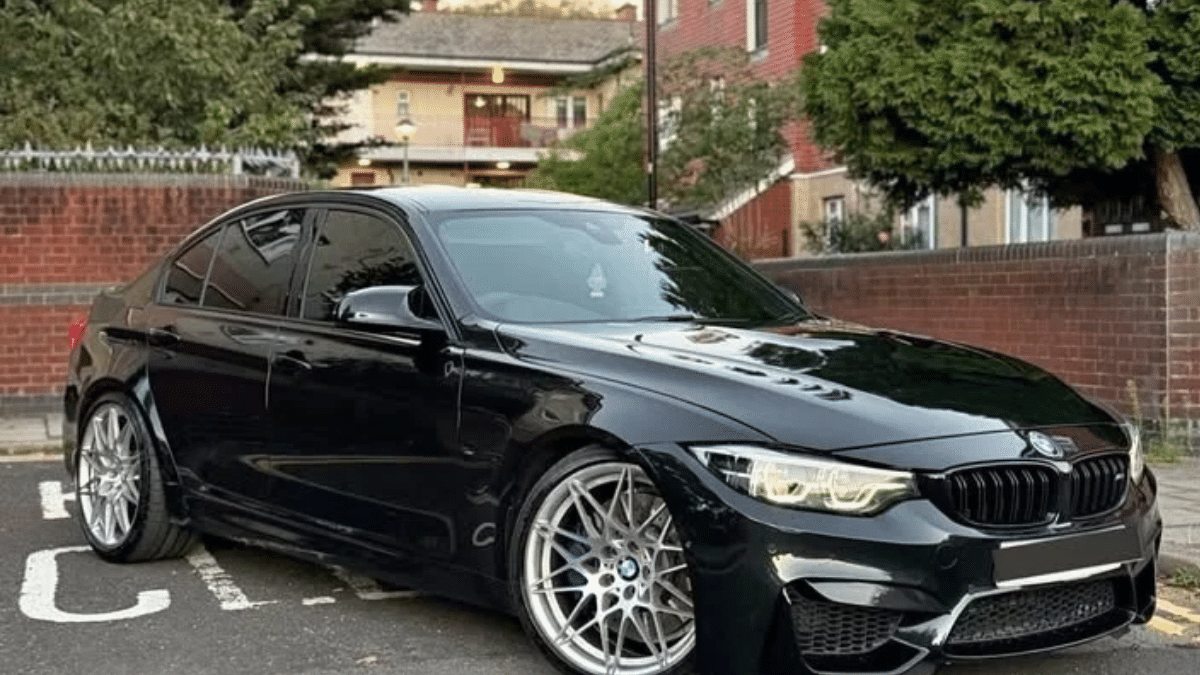
The bmw m3 competition is widely regarded as the ultimate benchmark in modern automotive engineering, blending racetrack precision with everyday saloon usability. For decades, the M Division has fine-tuned its flagship performance recipe, but this generation sets a new precedent for speed, technology, and sheer lateral grip.
Whether tackling tight mountain passes, setting scorching hot laps on a weekend track day, or navigating bumper-to-bumper city traffic, this machine aims to do it all without compromise. In this definitive review, we examine the mechanical integrity, driving dynamics, cabin craftsmanship, and long-term running costs of the undisputed king of performance saloons.
Motorsport Heritage: The S58 Twin-Turbo Heart
At the very core of the bmw m3 competition is the celebrated S58 3.0-litre twin-turbocharged inline-six engine. Directly derived from factory GT3 endurance racing applications, this engine features a closed-deck crankcase, a forged lightweight crankshaft, and cylinder walls treated with a wire-arc spray-coating to minimize internal friction and heat buildup.
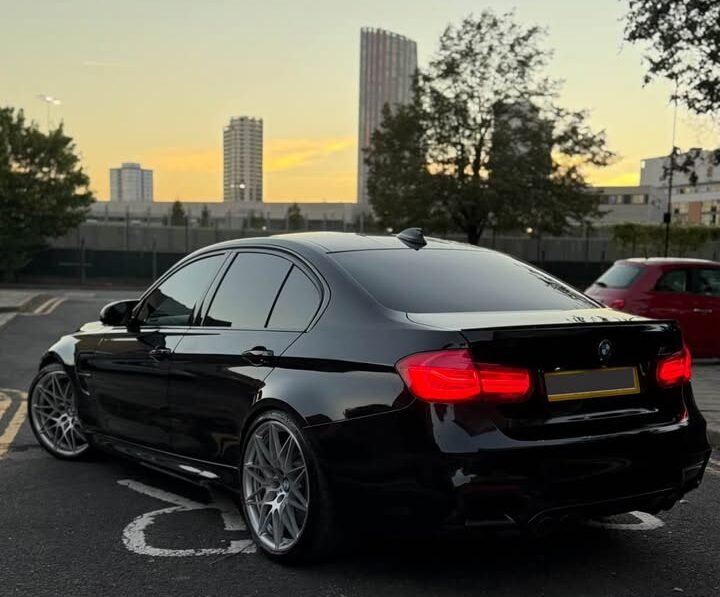
Generating an explosive 503 bhp (510 PS) and 650 Nm (479 lb-ft) of torque, the throttle response is astonishingly sharp. Turbo lag is practically nonexistent thanks to twin mono-scroll turbos that spool instantly from low RPMs. While older generations required high revs to unlock momentum, this modern performance m3 pulls like a locomotive from 2,750 RPM straight through to its 7,200 RPM redline.
Engineering Differences in the M3 BMW Competition
Even if an occasional used car buyer mistakenly types an unverified query like m3 competion into search engines, true petrolheads know that finding an official m3 bmw competition guarantees the upgraded engine tune, supplementary high-capacity radiator, and secondary transmission oil coolers needed for continuous track work.
Chassis Dynamics, Handling, and M xDrive Integration
Chassis balance has always separated legendary driver’s cars from straight-line muscle machines. Built primarily as an uncompromising bmw m3 saloon, it is reinforced from nose to tail with bespoke structural bracing, an aluminum shear plate under the front axle, and rigid subframe mounts.
Drivers can choose between traditional rear-wheel drive or the advanced bmw m3 competition xdrive platform. The xDrive setup uses an electronically controlled multi-plate clutch to distribute torque seamlessly between the front and rear axles. When traction conditions are optimal, 100% of the drive is routed to the rear wheels via an Active M Differential.
Key Dynamic Highlights
- Launch & Acceleration: In independent instrumented tests, the official bmw m3 0-60 sprint drops from 3.8 seconds on RWD models to a blistering 3.4 seconds on all-wheel-drive variants.
- Steering Precision: Variable-ratio electric power steering transmits precise front-axle feedback directly to the driver’s hands.
- Brake-by-Wire Technology: Allows drivers to configure brake pedal feel between a progressive “Comfort” setting and an aggressive, razor-sharp “Sport” response.
- M Dynamic Mode (MDM): Grants controlled slip angles on corner exits without disabling safety nets completely.
For drivers who already appreciate compact performance icons like the BMW M140i buying guide, stepping into the bmw m3 competition delivers a far more planted, unflappable chassis that devours mid-corner bumps without breaking stride.
Exterior Styling & Aerodynamic Functional Upgrades
The aggressive exterior aesthetic of the g80 m3 competition is strictly functional. The frameless vertical kidney grilles channel vast volumes of airflow directly into the primary radiator and brake cooling ducts, keeping fluid temperatures within safe operating limits during sustained high-speed driving.
Functional Exterior Components
- Carbon-Fibre Reinforced Plastic (CFRP) Roof: Lowers the center of gravity to reduce body roll during rapid directional changes.
- Staggered Wheel Fitment: 19-inch forged alloy wheels at the front and 20-inch wheels at the rear maximize mechanical turn-in and launch traction.
- Rear Aerodynamics: A functional rear diffuser and sculpted decklid spoiler keep the rear axle firmly planted at triple-digit speeds.
Cabin Architecture & Digital Cockpit Experience
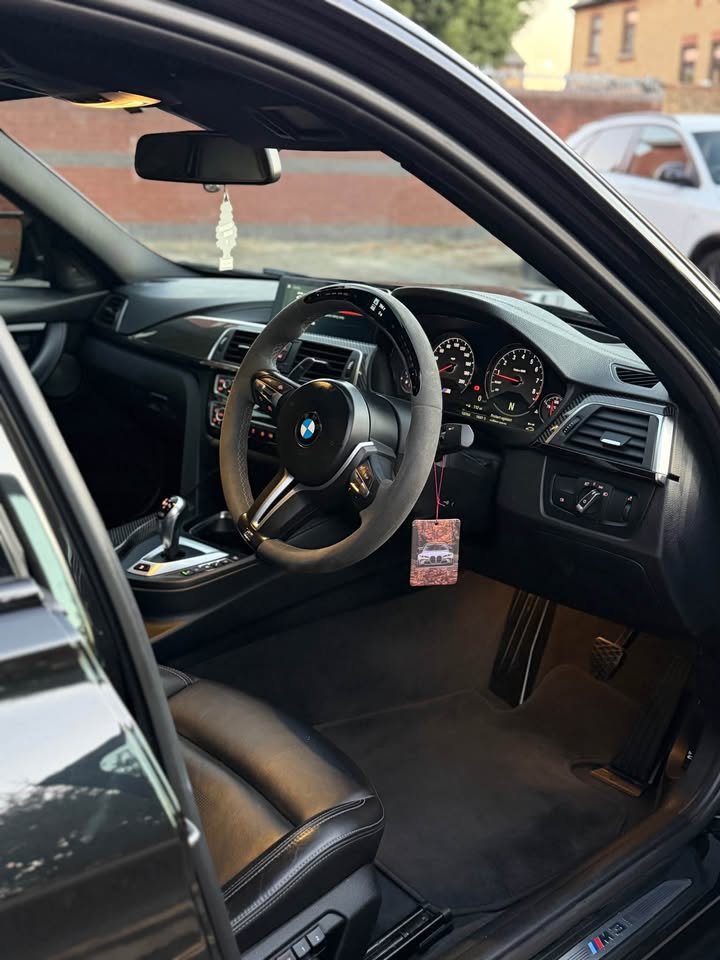
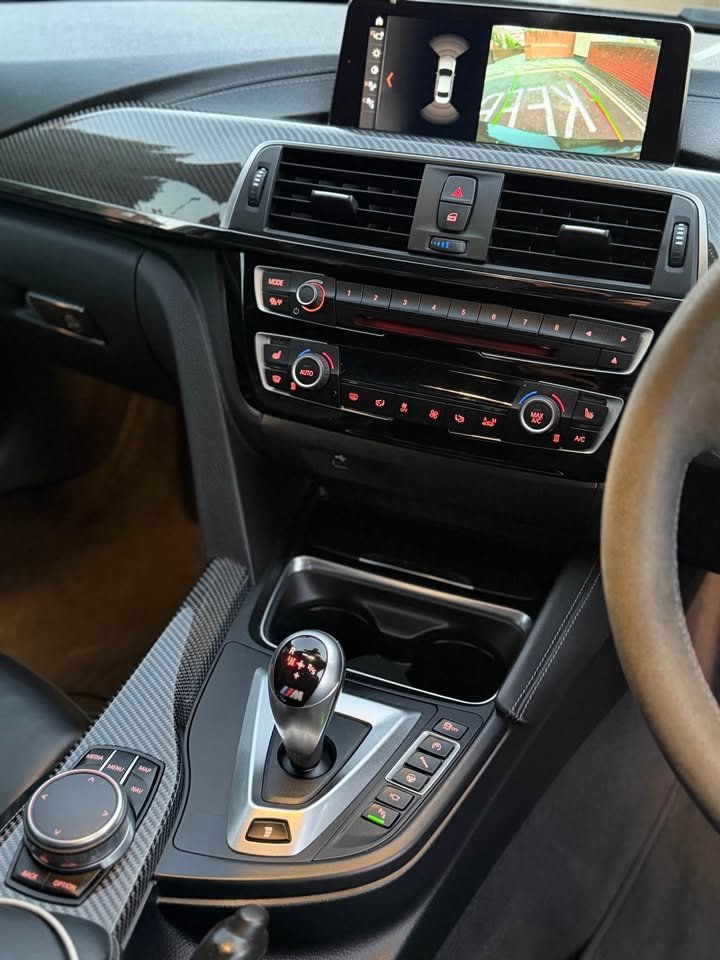
Inside, the bmw m3 interior flawlessly fuses track-ready ergonomics with first-class executive luxury. The centerpiece is the expansive BMW Curved Display, which seamlessly unites a 12.3-inch digital driver information screen with a 14.9-inch central infotainment monitor powered by Operating System 8.5.
Driver-Focused Interior Features
- M Carbon Bucket Seats: Save 9.6 kg of unsprung mass, feature illuminated M badges, and provide track-harness compatibility.
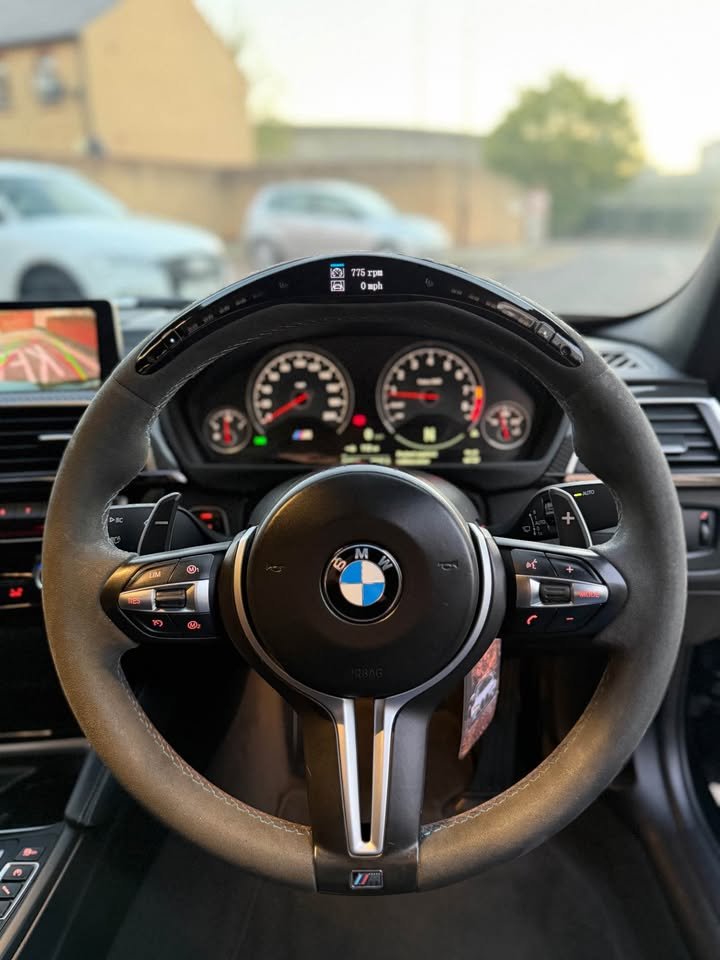
- Dual M Mode Buttons: Two red toggle switches (M1 & M2) on the steering wheel allow drivers to engage customized settings for steering, suspension, exhaust, and DSC in a millisecond.
- Practical Everyday Space: Unlike cramped two-door sports coupes, this five-passenger saloon features 480 litres of luggage volume, making family duty effortless.
Browsing across various cars bmw m3 models on the market will confirm that the tactile quality of Merino leather, ambient lighting, and carbon trim inside this cabin stands unmatched in the executive segment.
In-Depth Technical Specifications & Comparison
Below is the verified performance breakdown for both rear-wheel drive and M xDrive configurations of the bmw m3 competition:
| Mechanical Metric | Rear-Wheel Drive (RWD) | M xDrive All-Wheel Drive |
| Engine Code | S58 Twin-Turbocharged 3.0L Inline-6 | S58 Twin-Turbocharged 3.0L Inline-6 |
| Displacement | 2,993 cc | 2,993 cc |
| Peak Power Output | 503 bhp (510 PS) @ 6,250 RPM | 503 bhp (510 PS) @ 6,250 RPM |
| Peak Torque | 650 Nm (479 lb-ft) @ 2,750–5,500 RPM | 650 Nm (479 lb-ft) @ 2,750–5,500 RPM |
| 0–60 mph Acceleration | 3.8 seconds | 3.4 seconds (Verified 3.15s) |
| Top Speed | 155 mph (180 mph with M Driver’s Pack) | 155 mph (180 mph with M Driver’s Pack) |
| Transmission | 8-Speed M Steptronic with Drivelogic | 8-Speed M Steptronic with Drivelogic |
| Kerb Weight (EU) | 1,805 kg | 1,855 kg |
| Official Combined Fuel Economy | ~28.8 MPG (WLTP) | ~28.0 MPG (WLTP) |
Real-World Running Costs, Fuel Economy & Maintenance
Owning a high-performance vehicle requires realistic budgeting for regular maintenance. The S58 powertrain has proven exceptionally sturdy and reliable, leaving behind the crank-hub anxieties of earlier generations.
Essential Maintenance Checklist
- Running-In Service: Crucial at 1,200 miles (2,000 km). BMW technicians flush and replace the engine break-in oils and differential fluids.
- Tyre Life: High-grip Michelin Pilot Sport 4S compound rubber will typically last 12,000 to 15,000 miles during spirited road use, though frequent track sessions will shorten this lifespan.
- Braking Overhauls: Standard cast-iron compound brakes are reasonably priced to replace. Optional M Carbon Ceramic brakes offer completely fade-free track stopping power, but replacement discs command premium prices.
- Fuel Economy: Highway cruising easily delivers 26–29 MPG. However, spirited canyon carving or city driving will quickly drop efficiency to 15–18 MPG.
If you are evaluating whether to step into a purebred sports saloon versus a performance SUV like the BMW X5 M50d ownership review, the M3 will demand slightly more tire management but rewards you with significantly higher cornering capability.
Market Rivals: How It Outclasses the Competition
Within the premium bmw competition circle and broader sports saloon market, the M3 stands up against formidable rivals:
- Alfa Romeo Giulia Quadrifoglio: The Giulia delivers incredible steering responsiveness, but falls behind in digital dashboard technology, build quality, and wet-weather stability compared to the m3 bmw competition.
- Mercedes-AMG C63 S E-Performance: Mercedes switched to a 4-cylinder plug-in hybrid powertrain. Despite high peak torque, its excessive curb weight (over 2,100 kg) dulls agility compared to this nimble six-cylinder performance m3.
- Audi RS4 / RS5 Sportback: Audi offers secure all-weather grip and understated styling, but struggles with understeer at the limit and lacks the driver adjustability found in the BMW.
These dynamic advantages prove that anyone taking delivery of a new m3 is investing in a benchmark that commands high residual values across the pre-owned marketplace.
Frequently Asked Questions (FAQ)
What is the difference between the standard M3 and the BMW M3 Competition?
The bmw m3 competition delivers a significant performance bump over the standard M3, generating 503 hp and 650 Nm of torque compared to the base model’s 473 hp and 550 Nm. Furthermore, the Competition model is fitted exclusively with the 8-speed M Steptronic transmission with Drivelogic and offers the option of the rear-biased M xDrive all-wheel-drive system.
What is the realistic 0–60 mph acceleration time of the BMW M3 Competition?
The official bmw m3 0-60 sprint for the rear-wheel-drive variant is 3.8 seconds. On the bmw m3 competition xdrive model, launch control drops this figure to an official 3.4 seconds, with independent instrumented road tests frequently clocking sprints under 3.2 seconds.
Can the BMW M3 Competition be driven comfortably every day?
Yes. Thanks to standard Adaptive M Suspension, switching the car into “Comfort” mode softens the damper valves, soaking up rough asphalt and road imperfections. With seating for five adults, acoustic glass, and a spacious 480-litre boot, it easily handles daily family duties.
How much is a BMW M3 Competition to buy and own?
For prospective buyers asking how much is a bmw m3, brand-new models start around £82,000 to £88,000 ($80,000 to $85,000 USD MSRP) before options, with well-maintained used examples from early production runs holding strong resale value above £55,000.
Is the BMW M3 Competition available with a manual transmission?
No. To reliably handle the immense 650 Nm of torque and maximize acceleration, the bmw m3 competition is offered exclusively with an 8-speed automatic gearbox. The 6-speed manual transmission is reserved solely for the lower-output, rear-wheel-drive standard M3.
Does the BMW M3 Competition hold its resale value well?
Yes. Thanks to its strong enthusiast following, class-leading track dynamics, and the proven mechanical reliability of the S58 engine, the bmw competition badge exhibits substantially stronger residual values than mainstream luxury saloons.
Final Verdict: Is It the Ultimate Driver’s Car?
The bmw m3 competition successfully defends its crown as the gold standard of high-performance saloons. It combines brutal straight-line pace, telepathic steering feedback, and daily practicality into a cohesive, highly desirable package.
For driving enthusiasts who demand pure track-day capability on the weekend without giving up everyday comfort, this machine remains completely unrivaled.
1 thought on “BMW M3 Competition Review: 7 Brutal Truths Behind the Ultimate Super Saloon”